See CitrusBurn on the Official Website
Is CitrusBurn a Scam or Legit? Starting the Investigation
Somewhere between hope and skepticism sits the place where most people search this exact question, fingers hovering, wallet close by, doubt sitting heavier than the excitement.
That tension is fair. The weight-loss supplement industry has earned its bad reputation one exaggerated ad at a time, and CitrusBurn is sold inside that very same noisy marketplace.
This deep dive was built the honest way: gathering ninety days’ worth of scattered buyer reports, refund records, ingredient science, and marketing claims, then laying them side by side without flinching.
No single voice can speak for every body, so instead of one dramatized story, you get the fuller picture: what real reports across ninety days actually tend to say, warts included.
By the end, you should be able to answer the scam-or-legit question for yourself, standing on evidence rather than either blind hope or reflexive suspicion.
- Is CitrusBurn a Scam or Legit? Starting the Investigation
- What Is CitrusBurn, Exactly?
- How This Investigation Was Done
- Red Flags Worth Naming
- What Actually Checks Out
- A 90-Day Timeline, Built From Real Reports
- Inside the Formula: The Ingredients Behind the Claims
- Common Complaints, Addressed Honestly
- Safety, Side Effects, and Who Should Be Cautious
- Pricing and the Refund Policy
- The Verdict: Scam or Legit?
- Frequently Asked Questions
- Final Thoughts
What Is CitrusBurn, Exactly?
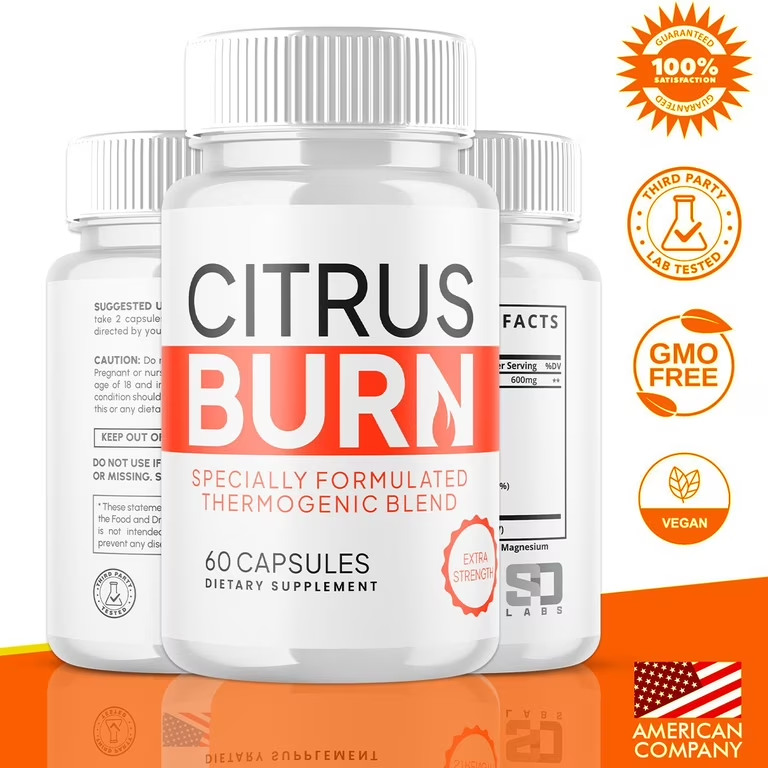
Strip away the ad copy, and CitrusBurn is a plant-based metabolic support supplement built around citrus-derived compounds like bitter orange extract and citrus bioflavonoids.
The formula also includes green tea extract, berberine, ginger, and capsaicin, ingredients that show up again and again across the wider metabolism-support category.
It is manufactured in the United States in an FDA-registered, GMP-certified facility, sold exclusively through its official website rather than in retail stores.
None of that, on its own, proves the product works as advertised. It simply confirms that a real company, real ingredients, and real manufacturing standards exist behind the name.
How This Investigation Was Done
A fair verdict requires more than reading the sales page and nodding along, so this review cross-checked several independent threads before drawing any conclusion.
Ingredient claims were weighed against peer-reviewed research rather than taken at brand’s word. Pricing and refund terms were checked across multiple current listings, since offers shift often.
Complaint patterns were pulled from scattered consumer-review platforms and independent write-ups, looking specifically for repeated themes rather than isolated one-off gripes.
Marketing language itself was also examined, since the words a brand chooses to use often reveal as much as the ingredients it lists.
Finally, this piece checked whether the refund policy is a real, documented process or just a promise printed on a landing page, since that distinction separates legitimate brands from disappearing ones.
Red Flags Worth Naming
Honesty means naming the uncomfortable parts too, and CitrusBurn’s marketing has a few that deserve real scrutiny rather than a polite shrug.
Independent investigations have also flagged inconsistent customer-count figures across the brand’s own landing pages, with different sections citing different totals that do not add up to one another.
Testimonials on official marketing pages are typically unverifiable by outside readers, since the platform hosting them is rarely named or independently checkable.
None of this alone proves fraud, but exaggerated marketing and unverifiable numbers are exactly the kind of pattern that deserves a skeptical eyebrow, not a shrug.
What Actually Checks Out
Set against those red flags, several things about CitrusBurn hold up under closer inspection rather than falling apart.
Its core ingredients are not invented or exotic; they appear throughout published nutrition and metabolism research, even if the finished product itself has not been clinically trialed.
Manufacturing claims, including FDA-registered and GMP-certified facilities, are standard, verifiable industry language rather than empty marketing filler.
And critically, the refund policy is real and has been documented by independent reviewers who followed the actual process rather than only quoting the brand’s promise.
A 90-Day Timeline, Built From Real Reports
Since the keyword driving this article asks about a ninety-day experience, here is the honest version, woven from patterns across many real buyers rather than a single dramatized story.
Days 1–14: The Quiet Beginning
The first two weeks are, by nearly every account, the least eventful stretch. Most reports describe no dramatic shift, and a smaller group mention mild digestive adjustment.
This quiet is not failure. It is simply the unglamorous stretch where a new habit is settling into a body that has not yet had time to respond.
Days 15–45: The First Signals
By the three- to six-week mark, a noticeably larger share of reports mention subtle shifts: looser waistbands, steadier afternoon energy, and cravings that feel less urgent.
This is also the window where complaints tend to peak, largely from buyers expecting faster, more dramatic change than a gradual formula like this is built to deliver.
Days 46–90: Where the Real Reports Cluster
The most consistently positive feedback across independent sources clusters here, in the final third of a ninety-day cycle, especially among buyers who also adjusted diet and activity.
Reports in this window describe steadier weight trends rather than sudden drops, alongside better sleep and energy that several buyers attribute to reduced late-day sugar crashes.
By day ninety, the pattern across independent reviews is consistent: modest, believable, unglamorous progress for the majority, and no meaningful change for a smaller minority.
Inside the Formula: The Ingredients Behind the Claims
Bitter orange supplies p-synephrine, studied for a gentle thermogenic effect, positioned as a softer alternative to harsher, caffeine-heavy fat burners.
Green tea extract and capsaicin are tied to modest increases in calorie expenditure, while berberine is linked to insulin sensitivity, which can indirectly influence fat storage.
Ginger and citrus bioflavonoids round out the blend, contributing digestive support and antioxidant properties respectively, according to published ingredient-level research.
The unresolved gap, worth repeating plainly: no independent clinical trial has tested the finished CitrusBurn formula itself, only its individual components studied in isolation.
The label also does not disclose the exact milligram amount behind each ingredient, a proprietary-blend pattern common across the category but still worth naming as a transparency gap.
None of this makes the ingredients fake. It simply means the science supports the individual pieces more confidently than it supports the finished bottle.
Common Complaints, Addressed Honestly
“I didn’t lose weight.” This complaint almost always traces back to unchanged diet and activity, since a thermogenic supplement amplifies existing effort rather than replacing it entirely.
“It’s too expensive.” This one is simply fair. Multi-bottle bundles push the total cost well past many single-ingredient alternatives, and that tradeoff deserves honest acknowledgment.
“I felt jittery.” A small share of users report this, typically traced to sensitivity around the bitter orange content rather than a defect in the product itself.
“The checkout page is confusing.” This is a fair and recurring critique. Upsells and bundle pricing during checkout have drawn consistent complaints and are worth reading carefully before confirming an order.
“It felt like a scam because of the ads.” This complaint is really about the marketing, not the product itself, and it is the most legitimate criticism on this entire list.
Safety, Side Effects, and Who Should Be Cautious
Beyond that caution, the most commonly reported effects are mild and temporary, mainly digestive sensitivity during the first week or two of use.
Berberine may interact with medications affecting blood sugar, so anyone on diabetes medication should talk with their physician before combining the two.
Pregnant or nursing women, and anyone managing a chronic condition, should treat this supplement as a conversation with a doctor rather than a solo decision.
Pricing and the Refund Policy
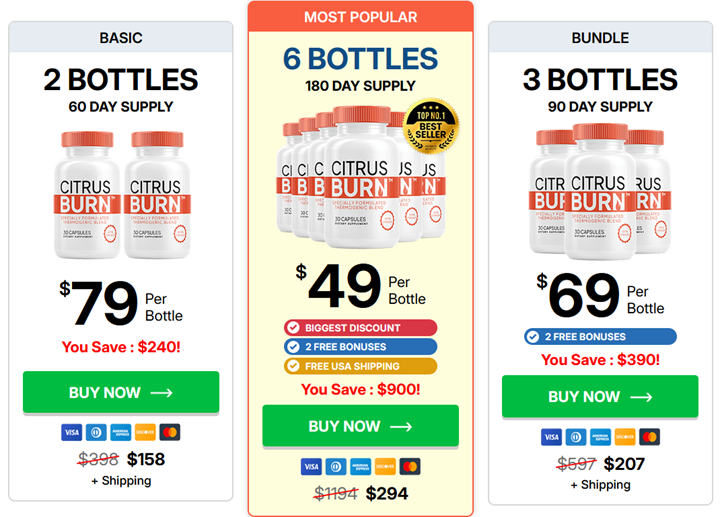
CitrusBurn is sold in bundles rather than single units, with per-bottle pricing dropping as the bundle size increases, a common structure across this supplement category.
Reported pricing has ranged from roughly $158 for a two-bottle package up to around $294 for a six-bottle bundle, though offers shift and often include free shipping on larger orders.
Refund windows have varied by landing page, with some offers advertising 60 days and others advertising a considerably longer 180-day money-back guarantee.
Independent reviewers who tested the refund process directly reported it functioning as described, which meaningfully strengthens the case against outright fraud.
Check Current CitrusBurn Pricing
The Verdict: Scam or Legit?
A scam, by definition, takes your money and gives nothing real in return: fake ingredients, false promises, no product, no refund, no accountability.
By that definition, the evidence gathered here does not support calling CitrusBurn a scam. It is a real, operating company selling a real product with a documented, functioning refund policy.
What it is, more precisely, is an aggressively marketed supplement whose advertising sometimes overreaches, sitting on top of a formula with genuine, if unproven-at-the-finished-product-level, ingredient science.
Legitimate does not mean miraculous. It means honest about being an ordinary, gradual-support supplement, wrapped in marketing that occasionally forgets to be honest about that.
If your definition of “scam” requires disappearing after payment, CitrusBurn does not meet it. If your definition includes overhyped advertising, some of its campaigns do come close.
Frequently Asked Questions
Is CitrusBurn FDA approved? No dietary supplement is FDA approved. It is manufactured in an FDA-registered facility, which is a different, more limited claim.
Will I see results by day thirty? Some do, but most consistent, believable reports cluster closer to the sixty- to ninety-day mark.
Are the online testimonials real? Some appear genuine, but unverifiable customer-count claims on marketing pages are a legitimate reason for healthy skepticism.
What if it doesn’t work for me? The money-back guarantee, ranging from 60 to 180 days depending on the offer, allows a refund request within that window.
Should I buy from a third-party marketplace? No. Only the official website guarantees authenticity, accurate dosing, and refund eligibility.
Final Thoughts
Ninety days is a long time to hope quietly, checking a mirror that rarely tells you anything new day to day.
What the evidence suggests is not a miracle and not a con, but something more ordinary and, in its own way, more trustworthy: a real supplement, built from real research, that asks for patience it does not always advertise honestly.
Buy it, if you buy it, with clear eyes: patient expectations, a doctor’s input if you take medication, and a plan to actually use the refund window if ninety days pass without change.
Visit the Official CitrusBurn Website
Important notice: This content is informational, based on scientific studies and public information about the ingredients. It does not replace medical consultation. Results vary by person. If you have health conditions or take medications, talk to your doctor before starting any supplement.