Overview
Type “metabolism support supplement” into any search bar these days and you’ll drown in options, but one name that keeps popping up is Citrus Burn (also styled CitrusBurn).
It’s positioned as a stimulant-light, citrus-and-herb capsule aimed at adults over 35 who feel like their metabolism has hit the brakes. Sound familiar? If you’ve ever felt like your body just doesn’t burn calories the way it used to, you’re the exact person this product’s marketing is built for.
But here’s the thing about the weight-loss supplement aisle: bold claims are cheap, and independent proof is expensive.
This review walks through what Citrus Burn says it does, what’s actually inside the capsule, how it stacks up against older-style fat burners, and where the marketing outruns the science — so you can decide with open eyes rather than just an open wallet.
- Overview
- What Is Citrus Burn?
- How Citrus Burn Says It Works
- Who Citrus Burn Is Marketed To
- Claimed Benefits, According to the Manufacturer
- Pricing, Packages, and Where It’s Sold
- Safety, Side Effects, and Who Should Be Cautious
- Citrus Burn vs. Traditional Stimulant Fat Burners
- A Closer Look at the Evidence Behind the Ingredients
- What Reviewers and Early Buyers Are Saying
- Red Flags Worth Knowing Before You Buy
- Conclusion: Is Citrus Burn Worth Trying?
- Frequently Asked Questions
What Is Citrus Burn?
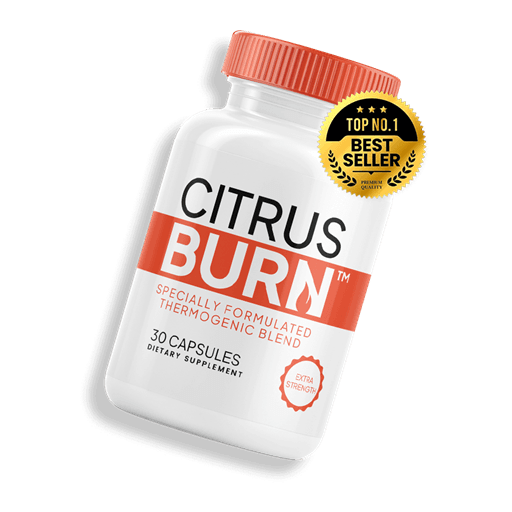
At its core, Citrus Burn is a daily capsule dietary supplement built around a blend of citrus extracts and plant compounds, sold directly through several branded websites rather than through most brick-and-mortar stores.
The company behind it frames the product around a concept it calls “thermogenic resistance” — the idea that as people age past their mid-30s, their body’s natural fat-burning furnace slows down and becomes harder to reignite through diet and exercise alone.
One capsule, taken daily before breakfast, is supposed to help “wake up” that process again.
It’s worth being precise about the category here: Citrus Burn is regulated in the United States as a dietary supplement, not a drug, which means it doesn’t have to prove effectiveness to any government agency before it hits the market.
That single fact shapes almost everything else in this review, because it means the burden of separating hype from evidence falls on you, the reader, rather than on a regulator who tested the product before approving it for sale.
Important notice: This content is for informational purposes and is based on an analysis of scientific studies and public information regarding the ingredients. It is not a substitute for medical advice. Results vary from person to person. If you have pre-existing health conditions or are taking medication, consult your doctor before starting any supplementation.
Citrus Burn is classified as a dietary supplement, not a drug — it has not been evaluated by the FDA and is not intended to diagnose, treat, cure, or prevent any disease.
How Citrus Burn Says It Works
The pitch is straightforward on paper: your body already knows how to burn fat for fuel, but stress, aging, and lifestyle habits gradually blunt that process, and Citrus Burn’s ingredient blend is supposed to nudge it back into gear.
Marketing materials for the product lean heavily on the word thermogenesis, the biological process where your body generates heat and burns calories to do it, and the company claims its formula can meaningfully amplify that response.
Some versions of the product’s marketing go as far as citing a specific figure, claiming the blend can boost thermogenic response by up to 74 percent — a number that, notably, doesn’t point back to any published, peer-reviewed study of the actual Citrus Burn formulation itself.
That distinction matters more than it might seem. A supplement can absolutely contain ingredients that have been studied individually in a lab, while the finished product sitting in your kitchen cabinet has never been tested as a whole.
Keep that gap in mind as we walk through the specific mechanism the brand describes.
The “Thermogenic Resistance” Theory
“Thermogenic resistance” isn’t a term you’ll find in mainstream endocrinology textbooks, and that’s an important detail rather than a nitpick.
It functions more as a marketing framework than a diagnosed medical condition, built loosely around real, well-documented facts — like the fact that resting metabolic rate does tend to decline somewhat with age, and that hormonal shifts can make weight management harder over time.
The company takes that kernel of truth and packages it into a catchy label that makes a supplement feel like the obvious fix. Think of it a bit like calling normal hair thinning “follicle fatigue syndrome” — the underlying biology is real, but the dramatic name is doing a lot of persuasive work.
None of this means the ingredients inside Citrus Burn are worthless; it just means you should treat the “thermogenic resistance” story as marketing language layered on top of biology, not as an established medical diagnosis you actually have.
Inside the Formula: Key Ingredients
Depending on which official Citrus Burn page or retailer listing you read, you’ll see slightly different ingredient lists — a detail worth flagging on its own, and one we’ll come back to later.
The most consistent version describes a seven-ingredient, roughly 800-milligram proprietary blend built in three layers: compounds meant to spark heat production, compounds meant to support glucose and fat metabolism, and compounds meant to calm appetite and cravings.
Because it’s labeled a proprietary blend, the brand discloses which ingredients are inside but not the exact dose of each one, so you know what you’re swallowing, just not exactly how much of it. Here’s how the most commonly listed version of the formula breaks down by function:
| Formula Layer | Ingredients | Claimed Role |
|---|---|---|
| Heat & Thermogenesis | Seville orange peel (synephrine), red pepper/cayenne extract | Stimulate calorie burning and fat oxidation |
| Metabolic Signaling | Berberine, green tea extract | Support insulin sensitivity and fat metabolism |
| Appetite & Cravings | Ginger root, apple cider vinegar extract | Support satiety and blood sugar stability |
| Energy & Hormonal Balance | Korean red ginseng | Adaptogenic energy and hormone support |
The Citrus and Heat-Producing Compounds
Seville orange peel is the ingredient doing the heavy lifting in the “citrus” half of the product’s name, and it’s included primarily for its p-synephrine content, a compound chemically similar to the banned stimulant ephedra but generally considered milder.
Synephrine has genuine research behind it showing it can modestly raise metabolic rate and calorie expenditure, particularly when paired with caffeine, though results across studies are inconsistent and the effect sizes tend to be small rather than dramatic.
Red pepper extract works through a related but distinct pathway, using capsaicin — the compound that makes chili peppers hot — to trigger a mild thermogenic effect and a temporary bump in calorie burn after eating.
Neither ingredient is exotic or unproven in the sense of being untested; both are reasonably common across the fat-burner category. The honest way to describe their combined effect, based on the broader research on each ingredient individually, is “modest metabolic nudge,” not “metabolic overhaul.”
The Metabolic and Craving-Control Compounds
Berberine is genuinely the standout ingredient in this formula from a research standpoint, and it deserves credit for that.
It’s a plant alkaloid that activates an enzyme called AMPK, sometimes nicknamed the body’s “metabolic master switch,” and multiple clinical studies and meta-analyses link it to improved insulin sensitivity, better blood sugar control, and modest support for healthy cholesterol levels.
Green tea extract brings its own track record, largely through catechins like EGCG that have been studied for mild fat-oxidation support, often in combination with caffeine.
Ginger and apple cider vinegar extract round out this layer, both included for their potential to support post-meal blood sugar stability, which can translate into steadier hunger signals rather than the spike-and-crash cycle that drives snacking.
Korean red ginseng shows up as an adaptogen, included more for its traditional use in supporting energy and stress resilience than for any direct fat-burning mechanism.
Who Citrus Burn Is Marketed To
The target customer for Citrus Burn is drawn fairly narrowly in the brand’s own messaging: adults, generally 35 and older, who feel their metabolism has slowed with age and who’ve already tried the basics — walking more, eating a little cleaner — without seeing the results they expected.
It’s explicitly pitched as a complement to existing healthy habits rather than a standalone miracle fix, which is a more honest framing than a lot of competitors in this space use.
Marketing copy also leans into the idea that this audience is tired of jittery, high-stimulant diet pills from a decade ago and wants something gentler instead.
If you’re picturing someone frustrated by a plateau despite genuinely trying, rather than someone looking for a quick fix with zero lifestyle change, that’s who this product is written for.
Whether that audience actually gets meaningfully better results than they would from the ingredients’ individual research alone is a separate question worth digging into.
Claimed Benefits, According to the Manufacturer
Every official Citrus Burn page circles back to roughly the same trio of promised benefits, and it’s worth breaking each one down on its own rather than lumping them together, since the strength of evidence differs quite a bit between them.
Metabolism and Fat-Burning Support
This is the headline claim, and it rests almost entirely on the thermogenic ingredients discussed above — synephrine, capsaicin, green tea catechins, and berberine’s effect on cellular energy metabolism.
The manufacturer describes this as helping your body “burn fat around the clock, even during rest and sleep,” which is a vivid way of describing a real but modest physiological effect: a slightly elevated metabolic rate for a period of hours after taking a thermogenic ingredient.
It is not the same thing as a dramatically supercharged metabolism that melts fat regardless of diet. If you’re picturing your metabolism as a campfire, these ingredients might add a little kindling and a puff of air, but they’re not pouring gasoline on it.
Realistic expectations matter enormously here, and the brand’s own materials acknowledge that visible results in measurements like waist circumference typically take 60 to 90 days of consistent use to show up.
Appetite and Blood Sugar Stability
The appetite-control claim leans on berberine, ginger, and apple cider vinegar extract, all of which have some research connecting them to steadier post-meal blood sugar.
The logic here is reasonably sound in principle: when blood sugar spikes sharply after a meal and then crashes, that crash often triggers hunger and cravings, so anything that smooths out the curve could plausibly reduce snacking urges.
Whether it does so strongly enough to feel like a noticeable appetite suppressant is a different matter, and individual responses to these ingredients vary quite a bit from person to person.
Some users in online reviews describe feeling fewer cravings within the first few weeks, while others report no real change in hunger at all.
That kind of mixed feedback is completely normal for ingredients working through subtle metabolic pathways rather than through a direct appetite-suppressant drug mechanism.
Energy Without the Stimulant Crash
Korean red ginseng and the overall “stimulant-light” formulation are meant to deliver the third promised benefit: steady energy without the jittery spike and crash associated with older-generation, caffeine-heavy fat burners.
This is one area where the marketing across different Citrus Burn websites actually contradicts itself, which is worth flagging directly.
Several official pages describe the product as completely stimulant-free, while at least one press release describing the formula mentions it containing caffeine, in the range of roughly 200 milligrams.
That’s not a small discrepancy — 200 milligrams of caffeine is roughly two cups of coffee’s worth, which would count as a meaningful stimulant dose for a lot of people, especially anyone sensitive to caffeine or managing anxiety, blood pressure, or sleep issues.
If steady, non-stimulant energy is genuinely your priority, this inconsistency is exactly the kind of thing worth clarifying directly with the seller, or checking the actual supplement facts panel on the bottle, before you buy.
Pricing, Packages, and Where It’s Sold
Citrus Burn is sold as a direct-to-consumer product, meaning you’ll typically buy it straight from one of its branded websites rather than picking it up at a pharmacy or big-box store, though private-label versions do show up on marketplaces like Amazon and eBay under similar names.
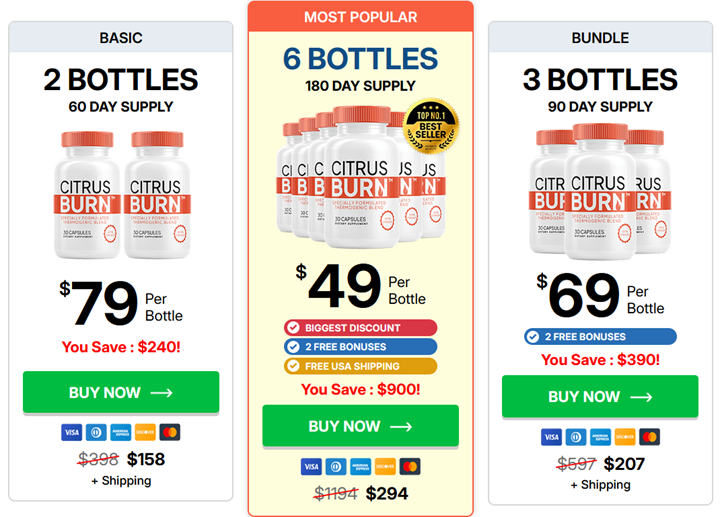
Pricing on the official site lists a single bottle at roughly $49, which is fairly typical for this category of supplement, and like most direct-to-consumer wellness brands, multi-bottle bundles are marketed as offering a lower per-bottle cost than buying one at a time.
Retailer listings show the same basic pattern reflected in pack sizes, offering roughly one, two, three, or five months of supply per order.
Because pricing, bundle deals, and shipping promotions change frequently and vary by which website you land on, the only reliable way to confirm current pricing is to check the seller’s cart page directly before completing a purchase, rather than relying on any number printed in a review — including
this one.
| Typical Package | Approx. Supply | Price Pattern |
|---|---|---|
| Single bottle | 1 month | Highest per-bottle cost |
| 3-bottle bundle | 3 months | Moderate per-bottle discount |
| 5-bottle bundle | 5 months | Lowest per-bottle cost, largest upfront total |
Tip: Because pricing, bundles, and shipping promotions change often across Citrus Burn’s various seller sites, always check the actual cart page for current pricing before buying — don’t rely on numbers printed in any review, including this one.
Safety, Side Effects, and Who Should Be Cautious
None of the ingredients in Citrus Burn are exotic or obscure — they’re common across the supplement industry — but “common” doesn’t automatically mean “risk-free for everyone.”
Synephrine and caffeine-containing thermogenics, if the higher-caffeine version of the formula is what you receive, can raise heart rate and blood pressure, which makes them worth avoiding or discussing with a doctor first if you have a heart condition, high blood pressure, or an anxiety disorder.
Berberine, despite its strong research profile, commonly causes digestive side effects like bloating, diarrhea, or stomach cramping in a meaningful share of users, and it can interact with medications for diabetes or blood sugar by amplifying their effect, which raises the risk of blood sugar
dropping too low.
Pregnant or breastfeeding people, anyone on prescription medication, and anyone with an existing medical condition should talk to a healthcare provider before starting Citrus Burn or any similar supplement.
It’s also worth remembering that dietary supplement claims in the United States have not been evaluated by the FDA, and products in this category are not intended to diagnose, treat, cure, or prevent any disease.
Citrus Burn vs. Traditional Stimulant Fat Burners
To understand where Citrus Burn fits in the broader fat-burner market, it helps to compare it against the older-school stimulant formulas that dominated the category for years — the ones loaded with high-dose caffeine, yohimbine, or now-banned compounds like DMAA.
Those products were built for intensity: a hard jolt of energy and appetite suppression, often paired with noticeable jitters, elevated heart rate, and a crash once the stimulant wore off.
Citrus Burn positions itself as the calmer alternative, prioritizing metabolic and blood-sugar-focused ingredients like berberine over brute-force stimulation, at least according to most of its official marketing.
That’s a meaningfully different philosophy, and for someone who’s caffeine-sensitive or burned out on jittery diet pills, it’s an understandable appeal.
| Feature | Traditional Stimulant Fat Burners | Citrus Burn (as marketed) |
|---|---|---|
| Primary mechanism | High-dose caffeine, yohimbine, or banned stimulants | Berberine, synephrine, capsaicin, green tea |
| Typical energy feel | Sharp spike, common crash | Marketed as steady, though caffeine content is inconsistently reported |
| Appetite approach | Direct suppression via stimulants | Indirect, via blood sugar stability |
| Common side effects | Jitters, elevated heart rate, anxiety | GI upset (berberine), possible cardiovascular effects if caffeine is present |
| Clinical testing of finished product | Rarely tested as a whole formula | Not independently tested as a whole formula |
A Closer Look at the Evidence Behind the Ingredients
Here’s where nuance really matters, and where a lot of supplement marketing tends to blur an important line: individual ingredient research is not the same thing as finished-product research.
Berberine has real, repeated clinical backing for blood sugar and metabolic outcomes — one frequently cited study found doses around 500 milligrams taken three times daily performed comparably to the diabetes medication metformin for blood sugar control, which is a genuinely notable finding.
Green tea catechins and synephrine both have research support for modest metabolic effects, particularly in combination with caffeine.
None of that adds up to proof that the specific Citrus Burn capsule, at whatever undisclosed doses it actually contains, produces the same results as studies conducted on isolated ingredients at specific, disclosed doses.
Marketing materials referencing research from institutions like Harvard or European universities are typically citing general research on an ingredient category, not a study of the finished Citrus Burn product itself — a distinction the marketing rarely makes explicit, and one you should make
explicit for yourself before deciding how much weight to put on those references.
What Reviewers and Early Buyers Are Saying
Independent-feeling reviews of Citrus Burn are genuinely hard to pin down, and that itself is worth knowing.
A search for reviews turns up a large number of near-identical article templates across different websites, several of which also happen to review completely unrelated supplements using the exact same structure, headings, and phrasing style.
That pattern is common across the direct-to-consumer supplement industry, where affiliate marketers publish large volumes of similarly formatted “review” content to rank in search results, and it makes it genuinely difficult to separate real customer experience from marketing dressed up as a review.
Buried within that noise, recurring themes do show up: some users report modest appetite changes and steadier energy within a few weeks, generally in line with what you’d expect from the ingredient profile, while others report no noticeable difference at all.
As with most supplements in this category, the most consistent feedback is that results, where they exist, tend to be gradual and modest rather than dramatic, and they show up alongside — not instead of — actual diet and activity changes.
Red Flags Worth Knowing Before You Buy
A few details are worth sitting with before you reach for your credit card.
First, the ingredient list itself isn’t fully consistent across Citrus Burn’s own marketing — some pages describe a seven-ingredient citrus-and-herb blend, while others describe a different combination centered on citrus aurantium and cayenne, which is the kind of inconsistency you don’t typically
see with a tightly controlled, single-formula product.
Second, the brand is sold across a surprising number of similarly named but differently spelled domains, a pattern more common with rapidly scaled, white-labeled supplement campaigns than with a single, established company standing firmly behind one product.
Third, near-identical private-label versions of what appears to be the same base formula show up on Amazon and eBay under entirely different brand names — think SaltBurn, Metaburn, and similar names using the same template descriptions — which strongly suggests a shared manufacturer supplying
multiple rebranded “products” rather than one company’s proprietary formula.
None of this proves the ingredients themselves are unsafe, but it’s exactly the kind of pattern that should make you slow down, read the actual supplement facts panel, and buy from a source with a clear return policy rather than clicking “buy now” on impulse.
Conclusion: Is Citrus Burn Worth Trying?
Strip away the marketing language, and Citrus Burn is a stimulant-light metabolic support supplement built from a handful of ingredients — berberine chief among them — that do have genuine, if modest, research behind them individually.
That’s a real point in its favor compared to some fat burners built on ingredients with little to no research support at all.
What it isn’t is a clinically proven, independently tested product with guaranteed results, and the inconsistencies across its own marketing — different ingredient lists, conflicting claims about caffeine content, and a scattering of near-identical branded domains — are reasons for genuine caution
rather than outright dismissal.
If you’re generally healthy, already have decent diet and exercise habits in place, and want to experiment with a berberine-forward supplement as a minor addition rather than a centerpiece strategy, it’s a low-stakes-enough option to consider after talking to your doctor, especially if you take any
medication for blood sugar or blood pressure.
If you’re hoping for a dramatic transformation without changing anything else, no supplement in this category, Citrus Burn included, is likely to deliver that.
Frequently Asked Questions
Is Citrus Burn FDA-approved?
No. Dietary supplements like Citrus Burn are not approved or evaluated by the FDA before they go on sale in the United States.
The manufacturer states it’s made in an FDA-registered, GMP-certified facility, which relates to manufacturing standards, not to the FDA approving the product’s health claims.
How long does it take to see results from Citrus Burn?
The manufacturer’s own materials suggest measurable changes, such as shifts in waist circumference, typically take around 60 to 90 days of consistent daily use, alongside existing healthy habits like regular activity and reasonable eating patterns.
Does Citrus Burn contain caffeine?
Marketing materials disagree on this point. Most official pages describe the formula as stimulant-free, while at least one press release describing the product mentions caffeine content around 200 milligrams.
Check the actual supplement facts panel on the bottle you receive, and consider contacting the seller directly, to confirm.
Can I take Citrus Burn with other medications?
Talk to a doctor or pharmacist first, particularly if you take medication for diabetes, blood sugar, or blood pressure. Berberine in particular can interact with diabetes medications and amplify their blood-sugar-lowering effect.
Is Citrus Burn the same as other similarly named supplements?
Not officially, but nearly identical formulas are sold under different brand names, such as SaltBurn and Metaburn, using similar product descriptions on marketplaces like Amazon.
This is common in the private-label supplement industry, where one manufacturer supplies the base formula to multiple rebranded sellers.