Check Beta-Alanine Prices on Amazon
- What Beta-Alanine Actually Is
- The Science Behind the Burn
- What the Research Actually Shows
- Who Really Benefits From It
- Dosage, Timing, and Loading Protocols
- Stacking With Creatine and Caffeine
- Safety and Possible Side Effects
- What to Look for When Buying
- Our Honest Verdict
- Frequently Asked Questions
There’s a particular kind of fire that lives in the legs during the last thirty seconds of a hard set, a burning that has nothing poetic about it in the moment, only urgency.
Anyone who has trained hard enough to meet that fire knows the exact second willpower alone stops being enough to carry the body forward.
Athletes have chased ways to hold that fire back for decades, searching for something that lets the body push just a little further before it finally surrenders.
Beta-alanine has quietly become one of the most trusted names in that search, not through flashy marketing, but through a slow accumulation of real, patient science.
This review exists to separate that science from the noise, and to answer honestly whether the tingling, the timing, and the cost are truly worth it.
Consider this less a sales pitch and more an honest conversation between two people who have both felt that same burn and wondered if there was a smarter way through it.
What Beta-Alanine Actually Is
Beta-alanine is a naturally occurring amino acid, one the body already produces in small amounts and also absorbs through foods like chicken and beef.
Unlike many trendy compounds sold under exotic names, beta-alanine’s role in the body is simple and well mapped: it becomes the building block for carnosine, a molecule stored inside muscle tissue.
That single relationship, beta-alanine feeding carnosine, is the entire foundation this supplement’s reputation rests on, nothing hidden, nothing mysterious.
It has earned genuine respect from sports scientists precisely because its mechanism is so clearly understood, a rare thing in an industry full of vague promises.
Unlike creatine, which the body stores primarily in muscle as a rapid energy reserve, beta-alanine’s entire job is to become carnosine, patiently, one small dose at a time.
That patience is the defining trait of this supplement, and understanding it early spares a lot of frustrated expectations down the road.
The Science Behind the Burn
To understand why beta-alanine matters, it helps to understand what actually causes that burning sensation during intense effort in the first place.
During hard exercise, hydrogen ions accumulate inside muscle fibers, lowering pH and interfering with the very contractions the muscle is trying to perform.
This is the wall so many athletes hit, not a lack of willpower, but a genuine biochemical limit the body imposes to protect itself.
It’s a strange kind of comfort, knowing the burn isn’t a personal failing but a shared, universal ceiling every human body carries into hard effort.
Carnosine and the Buffering Effect
Carnosine acts as a buffer, absorbing some of those excess hydrogen ions before they can shut the muscle down entirely.
Research has shown that consistent beta-alanine supplementation over four weeks or longer can raise muscle carnosine levels by roughly twenty to eighty percent.
That’s a meaningful shift, one that translates into a modest but measurable improvement in how long the muscle can keep firing under real strain.
It won’t feel like flipping a switch. It feels more like a slowly rising tide, a quiet extension of the window before the legs finally say no.
The Tingle: What Paresthesia Really Means
Anyone who has taken a full dose of beta-alanine on an empty stomach knows the sensation: a prickling, tingling warmth across the skin called paresthesia.
It’s harmless, well documented, and simply the nervous system’s response to a higher-than-usual dose hitting the bloodstream all at once.
Splitting the dose into smaller servings throughout the day largely eliminates this sensation, without reducing the supplement’s effectiveness at all.
Some athletes actually grow fond of the tingle over time, treating it as a small, familiar signal that the day’s training has officially begun.
What the Research Actually Shows
A 2024 meta-analysis pooling eighteen studies found a small but statistically significant benefit for maximal-intensity exercise lasting between four and ten minutes.
The greatest effects appeared after roughly four weeks of consistent use, at daily doses ranging from about 5.6 to 6.4 grams.
A separate 2026 review focused specifically on women found meaningful improvements in time to exhaustion, though results for peak power and VO2 max remained less consistent.
Research in adolescent and competitive runners has found improvements in time to exhaustion, though not always in broader aerobic capacity measures like VO2 peak.
Taken together, the evidence points to something honest and specific: beta-alanine helps most in that narrow window of sustained, high-intensity effort, not everywhere.
Older research, dating back decades, first identified beta-alanine’s ergogenic promise in trained athletes, laying the groundwork for the more refined studies that followed.
More recent work has even explored carnosine’s role beyond the gym, examining potential cognitive benefits in soldiers under stress and in aging populations facing decline.
That broader story doesn’t change the core fitness verdict, but it does reveal a compound with a longer, richer scientific history than most trending supplements ever earn.
The International Society of Sports Nutrition has backed beta-alanine’s ergogenic claims for years, a rare endorsement in a field often skeptical of bold marketing language.
Effect sizes across the research remain modest rather than dramatic, a detail worth sitting with honestly rather than glossing over in pursuit of a punchier headline.
Who Really Benefits From It
Rowers, sprinters, wrestlers, and anyone doing repeated high-intensity intervals sit squarely in the population where beta-alanine’s evidence is strongest.
CrossFit athletes and anyone chasing personal records in metabolic conditioning workouts often describe a real, felt difference once carnosine levels build up.
Powerlifters focused purely on single-rep maximal strength tend to see far less benefit, since those efforts are simply too short for the buffering effect to matter much.
Marathon runners and other long-distance endurance athletes also sit outside the sweet spot, since fatigue in those events comes from different physiological limits entirely.
Soccer players, basketball players, and combat sport athletes often fall somewhere in the middle, benefiting from the repeated bursts of high effort scattered throughout a match.
If your training rarely pushes past a minute of true maximal intensity, or regularly stretches beyond fifteen or twenty minutes, the evidence simply thins out considerably.
Knowing where your own training actually lives on that spectrum matters more than any brand name printed across the front of the tub.
Dosage, Timing, and Loading Protocols
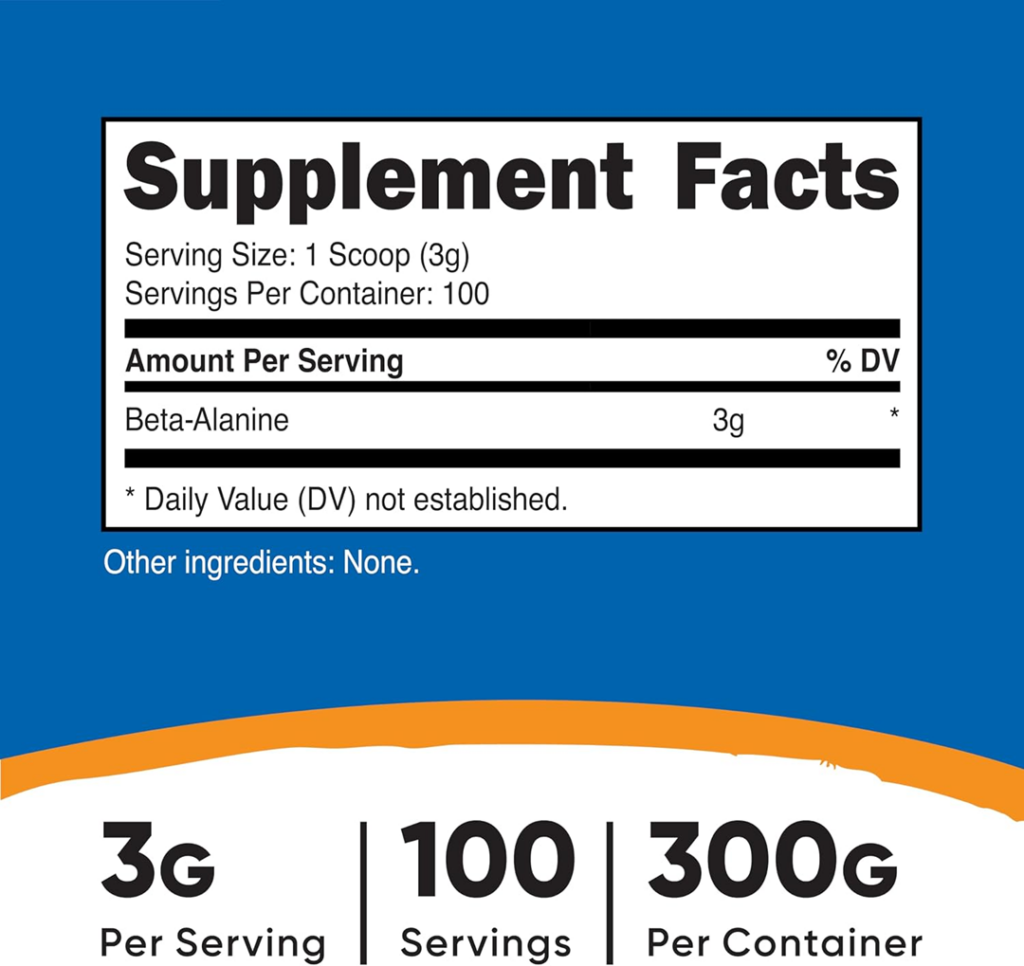
Most research settles on a daily dose between 3.2 and 6.4 grams, split into smaller servings of around 800 milligrams to avoid the tingling sensation.
There is no meaningful benefit to taking beta-alanine immediately before a workout, since its effect depends on carnosine already stored in the muscle over time.
A loading phase of at least two to four weeks is necessary before most people notice any real shift in training capacity or endurance.
Once carnosine levels rise, they tend to stay elevated for several weeks even after supplementation stops, though a gradual decline eventually follows.
This slow decay means occasional missed days won’t undo weeks of progress, a small mercy for anyone juggling a busy, imperfect training schedule.
Some athletes choose a higher loading dose for the first month, then shift to a smaller maintenance amount once carnosine stores feel sufficiently topped off.
Research suggests a maintenance dose closer to 1.2 grams daily may be enough to sustain elevated carnosine levels once the initial loading phase has done its work.
There’s no dramatic finish line here, no single day where the supplement suddenly “kicks in.” It’s closer to compound interest than fireworks.
Stacking With Creatine and Caffeine
Beta-alanine and creatine work through entirely different mechanisms, which is exactly why so many athletes choose to combine them in daily training.
Creatine supports the rapid energy system used in short, explosive bursts, while beta-alanine extends the window before fatigue sets in during sustained efforts.
Some research suggests caffeine may further support carnosine’s buffering effect, though the evidence here remains preliminary and less robust than the beta-alanine data alone.
Sodium bicarbonate is another compound sometimes paired with beta-alanine, since both target the same hydrogen-ion buffering problem through slightly different pathways.
Stacking supplements should never feel like collecting trading cards. Each addition deserves its own honest look at the evidence before earning a place in the routine.
Safety and Possible Side Effects
Beyond the harmless tingling sensation, beta-alanine carries one of the cleaner safety profiles among popular sports supplements on the market today.
Long-term studies, including research in soldiers and older adults, have not raised significant safety concerns at standard recommended doses.
People with kidney conditions or those on specific medications should still check with a doctor first, as a matter of general caution rather than known risk.
Pregnant or breastfeeding individuals should also consult a healthcare provider before adding any performance supplement to their routine.
Beyond that short list of precautions, beta-alanine remains one of the least controversial names on the crowded shelf of sports nutrition products.
No serious cardiovascular, liver, or kidney concerns have surfaced across the decades of research this compound has quietly accumulated.
What to Look for When Buying
Because beta-alanine is a single, well-defined compound, buying decisions often come down to purity, dosage per serving, and price per gram rather than exotic claims.
Third-party tested products, particularly those carrying NSF Certified for Sport or Informed Sport labeling, offer extra reassurance for competitive athletes facing drug testing.
Powder forms tend to offer better value per gram than pre-dosed capsules, though capsules remove the need to measure servings by hand each day.
Flavored powders can make the tingling sensation easier to tolerate mentally, though the physical sensation itself remains identical across every delivery format.
Price per gram of active ingredient, not the size of the tub or the boldness of the label, remains the single most useful number to compare across brands.
Avoid proprietary blends that hide the exact beta-alanine dosage behind vague labels like “performance matrix” or “endurance complex” without listing real numbers.
Transparency on the label is, in a strange way, the clearest signal of a brand’s honesty long before the first scoop ever gets measured.
See Current Beta-Alanine Options
Our Honest Verdict
Beta-alanine is one of the rare sports supplements whose mechanism, dosage, and effect size are all genuinely well understood by science, not just marketing copy.
It won’t turn a slow athlete into a fast one, and it won’t rewrite the ceiling of human performance, but it quietly extends the window before fatigue closes the door.
For anyone training in that narrow, demanding zone between one and ten minutes of maximal effort, the evidence genuinely supports giving it a try.
For powerlifters chasing a single heavy rep, or marathoners chasing a finish line hours away, the benefit shrinks toward something closer to negligible.
Used with patience, consistency, and realistic expectations, beta-alanine earns its place among the handful of supplements actually worth the shelf space.
There is something quietly reassuring about a supplement whose promise matches its evidence this closely, no exaggeration required to make the case worth hearing.
Maybe that’s the real lesson buried inside a small tub of white powder: the best tools rarely shout, they simply widen the room you have to work with, one rep further each time.
Aviso importante: este conteúdo é informativo e baseado em análise de estudos científicos e informações públicas sobre os ingredientes. Não substitui consulta médica.
Resultados variam de pessoa para pessoa. Se você tem condições de saúde preexistentes ou usa medicamentos, converse com seu médico antes de iniciar qualquer suplementação.
Frequently Asked Questions
Why does beta-alanine cause tingling?
It’s a harmless nervous system response called paresthesia, caused by a large single dose. Splitting doses throughout the day largely eliminates the sensation.
How long until beta-alanine actually works?
Most research points to two to four weeks of consistent daily use before muscle carnosine levels rise enough to produce a noticeable training benefit.
Should I take it before or after workouts?
Timing around workouts doesn’t meaningfully matter, since the benefit comes from carnosine already stored in muscle, not from the dose taken that day.
Is beta-alanine safe for long-term use?
Current research, including studies in older adults and soldiers, has not identified significant long-term safety concerns at standard recommended doses.
Does beta-alanine help with strength training?
It helps most with sustained high-intensity efforts lasting one to ten minutes. Pure one-rep max strength work shows much weaker evidence of benefit.
Can beta-alanine be combined with creatine?
Yes. The two work through different mechanisms and are commonly stacked together, with no significant interactions reported in the research so far.
Do women respond differently to beta-alanine?
Recent research suggests women show meaningful improvements in time to exhaustion, though effects on power and VO2 max remain less consistent than in men.