By Dr. Alex Rivera, MD – Internal Medicine Physician
Published on February 5, 2026
Sumatra Slim Belly Tonic Reviews
Does Sumatra Slim Belly Tonic Really Support Sustainable Weight Loss and Better Sleep?
Visit Official Website – Special Discount Available
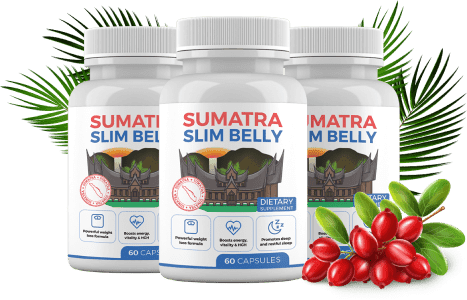
Sumatra Slim Belly Tonic is marketed as a natural supplement built around eight ingredients that aim to address stubborn weight gain at its roots. Now, here’s where it gets interesting: instead of focusing only on calories or stimulants, the formula leans heavily on sleep quality and the impact of blue light exposure. In other words, it approaches weight management from a recovery angle rather than a “burn more, eat less” angle. It is manufactured in the United States under GMP standards, which, frankly, is the minimum I expect when reviewing any ingestible product.Beyond that, the tonic claims to support fat metabolism, steady energy, deeper N-REM sleep, and even skin clarity. That’s a broad promise. So, realistically, the real question isn’t whether it sounds good — it’s whether the ingredients and user experience line up with those claims.
- 1.Sumatra Slim Belly Tonic
- 2.Sumatra Slim Belly Tonic Review
- 3.Sumatra Slim Belly Tonic Side Effects
- 4.What is Sumatra Slim Belly Tonic
- 5.Sumatra Slim Belly Tonic Tablet
- 6.Sumatra Slim Belly Tonic Supplement Review
- 7.What is the Sumatra Slim Belly Tonic Supplement
- 8.Sumatra Slim Belly Tonic Supplement Side Effects
- 9.Sumatra Slim Belly Tonic Pros and Cons
- 10.Sumatra Slim Belly Tonic reviews complaints
- 11.Sumatra Slim Belly Tonic reviews consumer reports
- 12.Sumatra Slim Belly Tonic ingredientes
- 13.does Sumatra Slim Belly Tonic work
- 14.Comparison with Alternatives
- 15.FAQ
- 16.Final Verdict
Sumatra Slim Belly Tonic
At first glance, Sumatra Slim Belly Tonic positions itself as a metabolism-support supplement. However, when you look closer, the emphasis is clearly on sleep architecture and hormonal rhythm. That’s actually a smart angle. Poor sleep, especially reduced deep sleep, is strongly associated with insulin resistance and fat storage. So, in that sense, the logic tracks.Users commonly report feeling more rested within the first couple of weeks. And honestly, when sleep improves, appetite regulation often follows. It’s not magic — it’s physiology. On the other hand, it’s not a standalone solution either. If someone is overeating consistently or not moving at all, no supplement will override that.
Sumatra Slim Belly Tonic Review
In this review, I looked at three core pillars: ingredient validity, safety profile, and real-world outcomes. The product is produced in GMP-certified facilities, which supports manufacturing quality. Moreover, the absence of stimulants is a major plus. Many weight supplements rely on caffeine-heavy formulas, which can disrupt sleep — ironically worsening metabolic health over time.That said, results are gradual. This is not a rapid fat-loss accelerator. Instead, it appears designed for steady improvements in sleep quality and metabolic balance. For patients who value long-term sustainability over dramatic short-term changes, that distinction matters.
Sumatra Slim Belly Tonic Side Effects
Based on available feedback and ingredient profiles, significant adverse effects are uncommon. Still, let’s be realistic: any supplement can cause mild digestive adjustments at first, especially those containing prebiotic fiber like inulin. Some users report slight bloating during the first week.The upside? It contains no stimulants, so issues like heart palpitations, jitteriness, or insomnia are far less likely. Even so, individuals with underlying conditions should consult their physician. That’s not just a disclaimer — it’s common sense.
What is Sumatra Slim Belly Tonic
So what exactly is it? In practical terms, Sumatra Slim Belly Tonic is a capsule-based supplement aimed at improving deep sleep, hormonal balance, and metabolic efficiency. It’s intended for adults dealing with stubborn belly fat, low energy, or fragmented sleep.Importantly, it should be viewed as a supportive tool. Not a replacement for nutrition, not a substitute for movement. Rather, it complements foundational lifestyle habits. And in my experience, those who treat it that way tend to report better outcomes.
Sumatra Slim Belly Tonic Tablet
Although many people search for it as a “tablet,” the product actually comes in capsule form. Users typically take two capsules before bedtime. The nighttime dosing aligns with its sleep-centered mechanism, which makes physiological sense.Capsules also allow more precise ingredient dosing compared to loose powders. On the flip side, individuals who dislike swallowing capsules may find this format less convenient. Still, for most adults, it’s straightforward.
Sumatra Slim Belly Tonic Supplement Review
From a supplement evaluation standpoint, what stands out is the multi-system approach: sleep support, metabolic regulation, gut health, and inflammation balance. That’s ambitious. However, the ingredients selected — such as berberine and 5-HTP — do have research backing their roles in blood sugar control and mood regulation.Consistency appears key. Most positive reviews describe noticeable changes after 8 to 12 weeks. Short-term users often report improved sleep first, then gradual body composition shifts. That progression is biologically plausible.
What is the Sumatra Slim Belly Tonic Supplement
In essence, this supplement combines plant extracts, amino acid derivatives, antioxidants, and prebiotic fiber. The broader goal is to optimize internal recovery processes overnight. And honestly, that’s an underappreciated aspect of weight management.By supporting serotonin pathways, gut microbiome balance, and metabolic signaling, it attempts to influence several indirect drivers of fat accumulation. It’s a systems-based approach rather than a single-target formula.
Sumatra Slim Belly Tonic Supplement Side Effects
Side effects are generally mild when they occur. As mentioned earlier, digestive shifts are the most common. Starting with one capsule for several days may help sensitive individuals adjust.Of course, pregnant or nursing women, and those on prescription medications — especially blood sugar–lowering drugs — should consult a healthcare provider. Berberine, for example, can influence glucose metabolism.
Sumatra Slim Belly Tonic Pros and Cons
Pros:- Targets sleep quality as a foundation for metabolic improvement
- Stimulant-free formula, suitable for nighttime use
- Includes research-supported ingredients like berberine and 5-HTP
- 90-day money-back guarantee reduces financial risk
- Many users report gradual, sustainable fat reduction
- Bonus materials included with larger orders
- Results require patience and lifestyle alignment
- Only available through the official website
- Some marketing claims (e.g., blue light emphasis) need stronger clinical validation
- Individual response varies significantly
- Shipping fees may apply for single-bottle purchases
Sumatra Slim Belly Tonic reviews complaints
The most common complaints revolve around expectations. Some users anticipate dramatic weight loss within weeks. That’s simply unrealistic for a non-stimulant supplement. Others mention occasional shipping delays, particularly with international orders.Encouragingly, serious safety concerns are rare in verified reviews. As always, purchasing from the official source minimizes issues related to authenticity.
Sumatra Slim Belly Tonic reviews consumer reports
Consumer-reported outcomes generally describe losing between 5 and 15 pounds over two to three months — typically alongside dietary adjustments. Improved sleep quality is the most consistently reported benefit. Increased morning energy follows closely.Negative reviews often reflect inconsistent use or unchanged lifestyle habits. That pattern is common across nearly all metabolic supplements I’ve reviewed.
Sumatra Slim Belly Tonic ingredientes
The formula includes the following key components:
- Valerian Root — Traditionally used to promote relaxation and sleep depth.
- Humulus Lupulus (Hops) — May enhance sleep stability and reduce restlessness.
- 5-HTP (from Griffonia Simplicifolia) — Supports serotonin production, influencing mood and appetite.
- Berberine — Studied for blood sugar regulation and metabolic signaling.
- Spirulina Blue — Provides antioxidant and anti-inflammatory support.
- Black Cohosh — Often used for hormonal balance, particularly in women.
- Lutein — Known for eye health, potentially relevant in blue light discussions.
- Inulin — A prebiotic fiber that supports gut microbiota and satiety.
does Sumatra Slim Belly Tonic work
So, does it work? For many users, yes — particularly in improving sleep quality and supporting gradual weight changes. However, its effectiveness depends heavily on consistency and overall lifestyle patterns.Reported ratings average around 4.9/5 across large review samples, though as with any supplement, individual variability is real. In my professional opinion, it aligns best with individuals seeking sustainable metabolic support rather than rapid transformation.
Comparison with Alternatives
Compared to stimulant-based products like PhenQ or LeanBean, Sumatra Slim Belly Tonic prioritizes sleep optimization. That’s a fundamental philosophical difference. Pharmaceutical options such as Ozempic may produce faster results, but they come with medical supervision and potential side effects.Surgical interventions, of course, are more aggressive and invasive. In contrast, this tonic represents a lower-risk, gradual strategy. It’s not the fastest route — but it may be the most sustainable for certain individuals.
FAQ
Is Sumatra Slim Belly Tonic safe for long-term use?
For generally healthy adults following recommended dosing, yes. Long-term safety appears favorable based on ingredient profiles.
How soon can I expect results?
Many users notice improved sleep within 1–2 weeks. Visible weight changes typically require 4–8 weeks or longer.
Does it require a doctor's prescription?
No, it is sold as an over-the-counter dietary supplement.
Can I combine it with other supplements?
Yes, though avoid duplicating high-fiber or blood sugar–modulating ingredients without medical guidance.
Final Verdict: Is Sumatra Slim Belly Tonic Worth It?
In summary, Sumatra Slim Belly Tonic takes a sleep-centered, metabolism-support approach to weight management. That perspective is refreshing. While some marketing angles — particularly the emphasis on blue light as a primary cause of weight gain — require stronger clinical validation, the core ingredients themselves have reasonable scientific grounding.
It performs best as part of a structured routine that includes balanced nutrition and physical activity. For individuals willing to be patient and who prefer a non-stimulant, recovery-focused formula, it represents a credible option. Based on the available data, ingredient research, and user-reported outcomes, I consider it a reasonable supplement to trial — especially given the 90-day refund policy.