By Dr. Alex Rivera, MD – Internal Medicine Physician
Published on February 5, 2026
Curcumitol-Q BioBDMC Reviews
The Powerful Curcumin Supplement 59x Stronger Than Regular Turmeric – Honest User Experiences & In-Depth Analysis
Get Curcumitol-Q Now – Official Site with Special Offers & Free Shipping
Let’s be honest for a moment. Turmeric supplements are everywhere. Every health aisle, every wellness blog, every influencer stack. So when a product claims to be 59 times stronger than regular turmeric, the first reaction — at least mine as a physician — is skepticism. However, on the other hand, when a formula actually changes the chemistry behind how curcumin works in the body, that’s worth examining more closely.
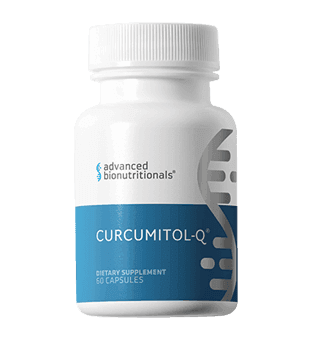
Curcumitol-Q BioBDMC from Advanced Bionutritionals isn’t positioned as just another turmeric capsule. Instead, it centers around a concentrated form of curcumin III (bisdemethoxycurcumin), standardized to 30% — which is dramatically higher than what we typically see in generic extracts. In practical terms, that matters because most traditional curcumin products struggle with poor absorption and low bloodstream availability. So while regular turmeric may look impressive on a label, in reality, very little makes it where it needs to go.
In this detailed Curcumitol-Q BioBDMC review, we’ll walk through the formulation, the science, real-world feedback, limitations, pricing, and whether it actually earns its premium status in 2026. No hype — just clinical reasoning, user experience patterns, and a balanced look at what works and what may not.
- 1.Introduction to Curcumitol-Q BioBDMC
- 2.What is Curcumitol-Q? Key Ingredients & Formulation
- 3.Claimed Benefits & How It Works
- 4.Scientific Backing & Bioavailability Comparison
- 5.Dosage, Pricing & Guarantee
- 6.Real Customer Reviews & Testimonials
- 7.Pros and Cons of Curcumitol-Q
- 8.Potential Side Effects & Warnings
- 9.Curcumitol-Q vs Regular Curcumin & Other Supplements
- 10.Final Verdict: Is Curcumitol-Q Worth It?
Introduction to Curcumitol-Q BioBDMC
Turmeric has been used for centuries — that part is well established. However, what most people don’t realize is that standard curcumin has notoriously poor bioavailability. In many studies, less than 1% is absorbed efficiently. So, in practical terms, you could swallow large doses and still see modest effects.
This is where Curcumitol-Q attempts to differentiate itself. Instead of relying on black pepper extract (piperine), which can irritate sensitive stomachs and interfere with certain medications, it uses a concentrated form of curcumin III combined with quercetin. In theory — and increasingly in practice — this allows for broader pathway targeting without relying on aggressive absorption enhancers.
Now, does that automatically make it superior? Not necessarily. But when we examine both biochemical pathways and user-reported outcomes, the formulation becomes more interesting than typical turmeric blends.
What is Curcumitol-Q? Key Ingredients & Formulation
At its core, Curcumitol-Q is built around two primary components:
- BDMC30 Concentrated Curcumin III: Standardized to 30% bisdemethoxycurcumin (curcumin III). For context, most turmeric extracts contain roughly 1% of this compound. This matters because curcumin III appears to act on different inflammatory signaling pathways compared to curcumin I and II.
- Quercetin: A plant flavonoid that enhances curcumin activity and independently supports inflammatory balance and vascular health. Some studies suggest absorption enhancement up to 147%, although individual responses vary.
Importantly, the formula avoids piperine. That’s relevant because while piperine can boost absorption, it may also alter drug metabolism in certain individuals. So, in that sense, this cleaner approach may be preferable for people on multiple medications.
Claimed Benefits & How It Works
So what does this mean in real-world terms? Users commonly report:
- Reduced joint stiffness, particularly in the morning.
- Less swelling in knees, hands, and lower back.
- Improved mobility within days to weeks.
- Better cognitive clarity and focus.
- Support for cardiovascular markers.
- Enhanced antioxidant protection.
Mechanistically, curcumin I and II primarily inhibit NF-kB pathways. Meanwhile, curcumin III targets MSK1 signaling. In simpler terms, it addresses inflammation from more than one direction. And honestly, that multi-angle approach is likely why some users notice faster relief compared to generic turmeric capsules.
That said, results are not uniform. Some individuals feel noticeable changes within hours. Others require several weeks of consistent use. Biology is rarely instant.
Scientific Backing & Bioavailability Comparison
Curcumin research is extensive — thousands of studies, in fact. The challenge has always been delivery. Regular powdered turmeric has limited systemic impact due to rapid metabolism and elimination.
Curcumitol-Q claims 59x greater strength based largely on antioxidant capacity (ORAC value comparisons) and concentrated curcumin III content. However — and this is important — ORAC values don’t always translate directly to clinical effect in humans. So while the numbers look impressive, practical outcomes matter more than lab comparisons.
To its credit, the ingredient selection aligns with established anti-inflammatory research. Quercetin synergy is well documented. Curcumin III’s MSK1 inhibition is emerging but promising. What’s missing, however, are large-scale independent trials specifically on this exact finished formula.
Dosage, Pricing & Guarantee
The typical recommendation is 2 capsules daily. Some individuals choose to split doses morning and evening for steadier support.
Pricing generally ranges around $49.95 per bottle, with discounts for multi-bottle bundles bringing the per-bottle cost down. There is a 90-day money-back guarantee — and notably, even empty bottles can be returned. That reduces financial risk, which is reassuring when trying a higher-priced supplement.
Real Customer Reviews & Testimonials
User feedback averages around 4.1 out of 5 across verified platforms. Now, that’s solid — not perfect, but credible.
- “Morning stiffness nearly gone within a week.”
- “Felt lighter in my knees after about 10 days.”
- “Energy improved and less back tightness.”
- “Finally something natural that actually works.”
Of course, not everyone reports dramatic changes. A minority mention slower onset or minimal difference. And a few raise concerns about mild blood-thinning effects, which aligns with curcumin’s known properties.
Pros and Cons of Curcumitol-Q
Pros:- High concentration of curcumin III (rare in standard products).
- No piperine — potentially gentler for sensitive individuals.
- Multi-pathway inflammatory targeting.
- Positive real-world user feedback.
- 90-day refund policy reduces purchase risk.
- Broad benefits beyond joints (heart, brain, antioxidant support).
- More expensive than basic turmeric capsules.
- Limited large-scale independent trials on finished product.
- Effects vary significantly by individual.
- Potential interaction with blood thinners.
- Not a substitute for medical treatment in severe conditions.
Potential Side Effects & Warnings
Generally well tolerated. However, because curcumin can influence platelet activity, individuals on anticoagulants or preparing for surgery should consult a physician first. Additionally, as with any supplement, those pregnant, nursing, or managing chronic disease should speak with their healthcare provider.
Curcumitol-Q vs Regular Curcumin & Other Supplements
Regular curcumin: inexpensive, widely available, but poorly absorbed.
Liposomal or micellar curcumin: high absorption, often higher price.
Curcumitol-Q: focuses on concentrated curcumin III plus quercetin synergy without piperine.
So, in practical comparison, Curcumitol-Q occupies a middle ground — stronger than basic turmeric, somewhat different from liposomal technologies, and targeted toward individuals who want potency without digestive irritation.
Final Verdict: Is Curcumitol-Q Worth It?
Here’s the balanced answer. If you’ve tried generic turmeric and felt nothing, this is meaningfully different. The concentration strategy, dual-pathway action, and quercetin pairing make it a more sophisticated formulation.
On the other hand, if you expect instant, pharmaceutical-level results, that’s unrealistic. This is nutritional support — not a prescription anti-inflammatory.
So, who is it best for? Adults managing joint stiffness, low-grade chronic inflammation, or looking for antioxidant support without NSAID reliance. Especially those who want a stronger curcumin option without piperine.
Given the ingredient science, user feedback patterns, and refund policy, Curcumitol-Q BioBDMC earns a cautious but positive recommendation in 2026.